|
|
||
Focus on Fire Safety: Smoke Alarms |
| By Fire Chief Ray Stackhouse | |
| January 2, 2009 | |
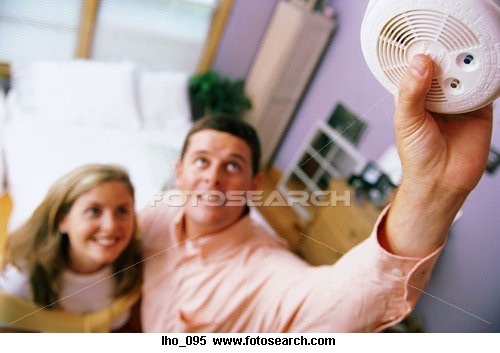
In the event of a fire, a properly installed and maintained smoke alarm can save your life and those of your loved ones. Smoke alarms are a very important means of preventing home fire fatalities by providing an early warning signal so you and your family can escape. They are one of the best safety devices you can buy and install to protect yourself, your family, and your home. You can prevent tragedies simply by testing and maintaining your smoke alarms and practicing a fire escape plan. All smoke alarms in your house should be tested once a month and their batteries replaced annually or as indicated by the manufacturer's instructions. What Types of Smoke Alarms Are Available?
The type of smoke produced by a fire depends strongly on the type of fire. Flaming fires produce a different type of smoke than smoldering fires. Both types of smoke alarms will detect the smoke from either a smoldering fire or a flaming fire. It has been factually established and well known for many years that: Ionization type smoke alarms tend to respond faster to the smoke produced by flaming fires than photoelectric type smoke alarms, and Photoelectric type smoke alarms tend to respond faster to the smoke produced by smoldering fires than ionization type smoke alarms. In some full-scale fire tests, the difference in the time to alarm between ionization and photoelectric type smoke alarms has been found to be trivial. In other full-scale fire tests, the difference in response time has been found to be considerable. The USFA provides the following guidance to the public and to state and local legislative bodies that may be grappling with the issue of the proper type of smoke alarm to select for use in a residence: It cannot be stated categorically that one type of smoke alarm is better than any other type of smoke alarm in every fire situation that could possibly arise in a residence. Because both ionization and photoelectric smoke alarms are better at detecting distinctly different yet potentially fatal fires, and because no one can predict what type of fire might start in a home, the USFA recommends that every residence and place where people sleep be equipped with either (a) both ionization and photoelectric smoke alarms, or (b) dual sensor smoke alarms (which contain both ionization and photoelectric smoke sensors). The location of a smoke alarm within a home may be more important than the type of smoke alarm present, depending on the location of a fire. The USFA recommends that users follow the manufacturer's guidance on the recommended location of smoke alarms in a home. The USFA recommends that every residence and place where people sleep be equipped with either (a) both ionization and photoelectric smoke alarms, or (b) dual sensor smoke alarms (which contain both ionization and photoelectric smoke sensors). Where Would I Get Smoke Alarms?
Okay, Where Do I Put Them?
Are Smoke Alarms Hard to Install?
How Do I Keep My Smoke Alarm Working?
If you have a smoke alarm with batteries:
What if the Alarm Goes Off While I'm Cooking?
Anything Else I Should Know?
Plan and practice escape plans several times a year.
|
|
|
|
||