|
|
||
Parkesburg Ambulance Lieutenant Graduates Paramedic School |
| By Fire Chief Ray Stackhouse | |
| July 30, 2010 | |
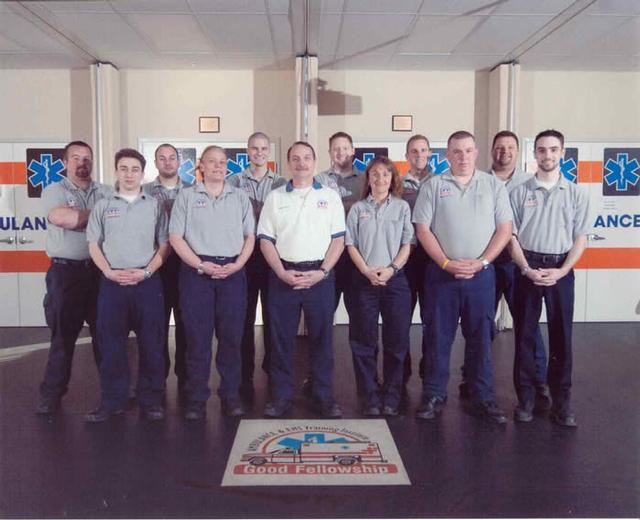
Parkesburg Fire Company Ambulance Lieutenant Penny Knotts graduated Paramedic School after a grueling 12 months of class, clinical training, working full time, being a mother and still finding time to volunteer! Thank you Penny for your dedication and hard work. Read more about what she had to go through to graduate:
Over the past 30 years, the development of emergency medical systems has significantly improved the caliber of emergency care provided prior to hospital arrival. The Good Fellowship EMS Training Institute, with the assistance of the Center for Emergency Medicine in Pittsburgh, Pennsylvania, has developed an education program for paramedics that prepare students to meet the increasing demands of out-of-hospital care. Emergency medicine professionals have developed the Good Fellowship EMS Training Institute's Paramedic education program to equip students with the knowledge, skills and values necessary to develop as medical professionals. Throughout the program, students receive instruction in the art and science of emergency medicine through lecture, lab, and clinical education in the hospital and field. The curriculum involves students in these components of education concurrently. This enables paramedic students to master theory and practical application quickly. All of Good Fellowship's EMS Training Institute's Paramedic Education programs are designed to provide students with the knowledge and skills needed to provide high quality emergency medical care. Good Fellowship's EMS Training Institute's Paramedic Program is accredited by the Commonwealth of Pennsylvania Department of Health.
Good Fellowship's EMS Training Institute offers a paramedic diploma program designed to prepare paramedics for entry-level positions in urban, suburban, and rural Emergency Medical Services throughout the country. The program meets two nights a week and during the day on Saturdays over two semesters and a third semester spent in a field internship. The program is completed within 12 months. The dates for the upcoming year are: September 2010 to August 2011. SPECIALTY CERTIFICATIONS The curriculum has been designed to provide the student with an opportunity to obtain certification in: Basic Cardiac Life Support (BCLS) Pediatric Advanced Life Support (PALS)
Good Fellowship's EMS Training Institute is using the 1998 Paramedic: National Standard Curriculum. This is the most comprehensive curricula in the history of EMS and was developed to prepare advanced level providers for the new millennium. The course of study meets or exceeds all of the minimum national and Commonwealth of Pennsylvania training requirements. Upon graduation from the program, the students will take the National Registry of Emergency Medical Technicians EMT-Paramedic Examination. All exam fees are included in the student's tuition. The course of instruction consists of four phases of education: didactic, laboratory, clinical/field and summative field internship. The program consists of over 495 hours of didactic education and laboratory education, and over 552 hours of clinical education. The didactic material provides the foundation for understanding the purpose and objectives of clinical treatments. We believe that this is the distinction between the professional and the technician. This philosophy provides the rationale for the development of a comprehensive classroom curriculum. Laboratory training provides a safe and effective opportunity for students to develop psychomotor skills and apply concepts to clinical decision-making. Good Fellowship's EMS Training Institute maintains an extensive array of training manikins, models and equipment specifically for practice of the psychomotor skills of patient care. We maintain a state-of-the-art computer laboratory with the latest educational software and Internet access. Clinical and field training provide an opportunity to develop and apply clinical knowledge and skills to the actual treatment of emergency patients. As students are instructed in the theoretical practice of emergency medicine, they participate in various supervised clinical experiences. These experiences are designed to refine the skills involved in patient care. During clinical and field training, students have an opportunity to rotate through Chester County's respected emergency medical services and health care facilities. At the successful completion of the didactic and clinical courses, students are required to complete a 120 hour Summative Field Evaluation. This summative evaluation provides students the opportunity to serve as a team leader and to demonstrate their knowledge and skills in the role of an entry level paramedic. As part of the program, students complete field clinical course work with various EMS units located throughout Chester County. The field and clinical training enables students to apply their knowledge and clinical skills in the out-of-hospital environment. Each student is assigned an experienced paramedic who will serve as a preceptor and mentor during each term. While in training, each student completes in-hospital clinical experience in the following areas:
|
|
|
|
||